

Some Thoughts on Gyorgy Kepes
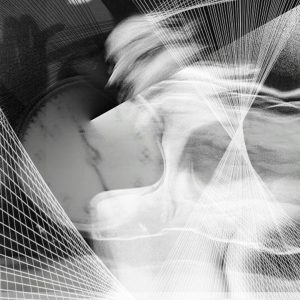
Hungarian artist Gyorgy Kepes dedicated his life to integrating art and science. He became a member of the M.I.T. faculty in 1946. In 1967, he established the Center for Advanced Visual Studies within the School of Architecture to facilitate the integration of new technology as an artistic medium, foster collaboration among artists, scientists, engineers, and industry, enhance work on an urban scale, create media for various sensory modes of perception, and draw inspiration from nature. The legacy of Gyorgy Kepes as a pivotal figure in the integration of art and science is evident through his transformative contributions at M.I.T. and beyond. Kepes relied heavily on his hands as the instruments of his craft, whether depicted grasping a set of lamps, posing with lighting apparatus and assembled tripods, using a mortar and pestle, or creating a photogram featuring a faint hand silhouette amidst various linear patterns, accompanied by a strategically positioned, diminutive red dot.
Kepes saw every graphic as a natural phenomenon, organically developing within an ordered structure that unified all elements into an integrated unit. He categorized visual elements into distinct categories, akin to linguistic grammar, using established syntax to generate phrases, chapters, and volumes. Kepes posited that a visual lexicon of patterns may connect science and art. Kepes used a language of epigenesis in several works, whereby art and science collaboratively influenced form within a gestalt of relationships.
In numerous photographs and photograms, Kepes employed the symbolism of his hands. Kepes created his earliest photograms in Budapest, drawing inspiration from nature and directly capturing the process on photosensitized surfaces without a camera. During the late 1920s, Kepes joined Moholy-Nagy’s studio in Berlin. Throughout his time at the Bauhaus School in Germany, Moholy-Nagy introduced groundbreaking materials and methods. Kepes, alongside Moholy-Nagy, presented the ‘new vision’ of modern art. In his darkroom, he meticulously created photograms by strategically positioning objects directly on light-sensitive paper and exposing them to light. By employing a painted glass plate as a negative, he produced ‘photo-drawings.’ Kepes underwent multiple relocations throughout the 1930s and World War II, leaving only a limited number of his works preserved. Photograms, which are light imprints of natural entities, serve as abstract representations linked to Kepes’s later interest in scientific documentation. Kepes saw the photogram as a new medium and was deeply committed to its development. He may have even seen it as an improvement over photography because it gave him greater control over light. Kepes sought to amalgamate cliché verre and decalcomania, two 19th-century techniques for blending materials of varying viscosities. The lava-like formations of diffused ink and colored pigments between the glass sheets before the photographic paper induced “metaphysical events.” He asserted, “These images are photogenic, created by light, and if fortunate, emit light.” Kepes considered the photogram capable of conveying the dual character of energy, implying that it can be a particle and a field simultaneously. His Cliché Verre prints strive to describe the material’s dynamic essence and the worlds it represents.
Although substantial contemporary evidence exists on the concept of thinking with one’s hands, reflection is typically viewed as a cognitive process involving the conscious mind and lived experiences. I assert that Kepes had already begun to reinterpret the embodied nature of material reflective thinking, even in his time. He had been deconstructing the hierarchy of sensory experiences through tactile engagement and various media, while also demonstrating his affinity for hieroglyphic forms, inspired by Apollinaire’s ideograms and Miró’s paintings and poems. This concept parallels the photograms he produced in Budapest—abstract images created without a camera by placing diverse objects, including magnets, on photographic paper and exposing them to light. These innovative techniques challenged traditional notions of representation and invited viewers to reconsider their perceptions of reality through the interplay of light and form. By merging tactile and visual elements, he created a dialogue between the tangible and the abstract, allowing for a deeper exploration of human experience. Adopting an experiential approach that emphasizes conscious lived experience, Gyorgy Kepes elucidated the concept of automatism in his photograms. He engaged in an optical process that connected material processes to natural and spiritual forces, transforming it from a technical experiment into an immediate embodiment and a conceptual event.