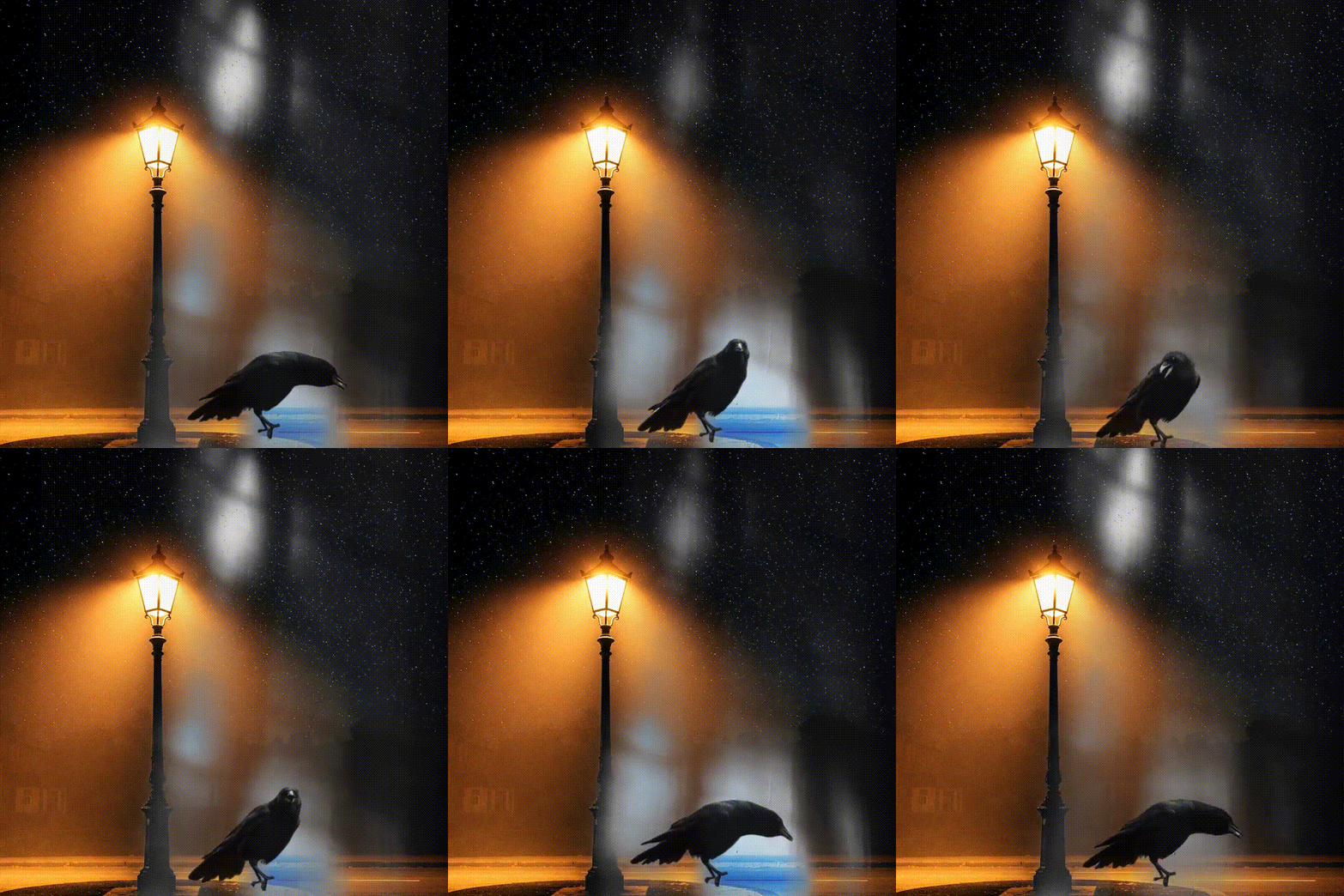

Thoughts on Louis Kahn and Coleridge
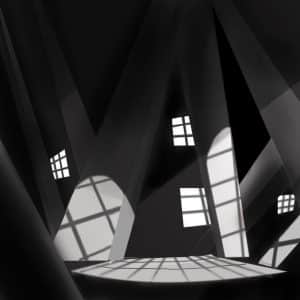
“Structure is the giver of light. When I choose an order of structure that calls for column alongside column, it presents a rhythm of no light, light, no light, light, no light, light. A vault, a dome, is also a choice of the character of light. Louis I. Kahn, “Between silence and light.”
Louis I. Kahn extensively contemplated the utilization of light to influence the design of his structures during his lifetime. He believed that light was an integral component of architecture, equally tangible as the brick, mortar, steel, or glass utilized in construction. Kahn never used a pure dark space for a formal effect since he believed dark shadows were natural. A glimpse of light revealed gloom to him: “A building plan should be read like a harmony of spaces in light. A gloomy space should have just enough light from a secret opening to show how dark it is. Structure and natural light define each space.”
When assigned in the 1960s to design the Erdman Hall Dormitories at Bryn Mawr College, Kahn was tasked with harmonizing communal and individual requirements. Central to Erdman Hall is Kahn’s application of three-dimensional geometry. The dormitory comprises three wings that extend outward, forming an unpredictable arrangement of spaces. The Norwegian architect Sverre Fehn characterized the dormitory as constructed from “grey-black stone and concrete,” noting that Kahn’s design adeptly manipulated darkness and shadow. He was significantly influenced by the Japanese sculptor Isamu Noguchi, who helped Kahn in cultivating the perception that the building resulted from the interaction of contours. Further exploration of Kahn’s work and thought enhances our understanding of architecture as simultaneously transparent and opaque, large and small, complex and straightforward, solitary and inclusive. Kahn was not an avowed poet; nonetheless, his writings possessed an inherent poetic quality, and at specific lectures, he articulated with metaphysical authenticity. He once said: “‘What is the shadow of white light?’ Gabor has a habit of repeating what you say, ‘White light . . . white light . . . I don’t know.’ And I said, ‘Black. Don’t be afraid, because white light does not exist, nor does black shadow exist.’ I think that it is a time of our sun on trial, of all our institutions on trial. I was brought up when the sunlight was yellow, and the shadow was blue. But I see it clearly as being white light, and black shadow. Yet this is nothing alarming, because I believe that there will come a fresh yellow, and a beautiful blue and that the revolution will bring forth a new sense of wonder. Only from wonder can come our new institutions . . . they certainly cannot come from analysis.”
Louis Kahn stated that everything that exists dwells within you. He disagreed with the compartmentalized architectural concepts espoused by many of his colleagues. He derived inspiration from luminosity rather than gloom. His perspective on architecture is a fusion of light and shadow, with the darkness gradually merging into what appears to be absolute blackness. Comprehending the complexities of shadows and darkness constitutes an essential aspect of Kahn’s artistic expression.
Kahn was influenced by transcendentalism during his early education in Philadelphia. Transcendentalists hold that God’s creation is governed by an eternal higher law that shapes human character. Kahn’s concepts reflect Coleridge’s notion of imagination, unique to each individual. The architect relies on self-confidence to determine how to translate the original shape into the modern context, as higher principles govern creativity. It is a manifestation of an individual’s creativity, yet it is universal and aligns with human institutions.
The domain of the senses can be figuratively shown by the concept of color awareness and the total lack of perception implied by its absence. This fundamental concept is exemplified in Coleridge’s poetry, which explores dream states and the unconscious content that emerges from them, oscillating between darkness and luminescence. Samuel Taylor Coleridge was profoundly fascinated by the connection between the physical body, especially the nervous system, and conscious experience. He was influenced by the physiological theories dominant in his time, particularly those of German Naturphilosophie and the works of physicians such as Blumenbach. Coleridge’s poem depicts Christabel, a clean and devoted virgin, and her encounter with Geraldine, an enigmatic woman in despair, in a shadowy world where superstition intersects neuroscience. The story contrasts innocence and temptation, spiritual virtue with paranormal iniquity. Coleridge uses rich symbolism and images of light, serpents, and magic to examine darkness, awareness, and purity.
The narrator of Christabel conveys feelings of terror, wonder, and boundlessness, all of which exemplify Edmund Burke’s conception of the sublime. Kahn’s emphasis on incrementalism and the solid wall distinguishes his work from that of Mies van der Rohe, whose architecture of “almost nothing” embodies a minimalism characterized by skeletal simplicity. Although Kahn’s early experiments with skeletal structures exhibit a neo-Gothic influence, the predominant impression of his architecture is the accumulation of minimalist yet monumental volumes, whose hollowness is emphasized through the incorporation of contrasting wall openings and joints. This interplay of light and shadow not only enhances the spatial experience but also evokes a deeper emotional response, aligning with Burke’s idea that the sublime arises from the interplay of beauty and terror. Kahn’s work invites contemplation, encouraging viewers to engage with the weight of his structures while simultaneously appreciating their ethereal qualities.