

From the Cubicle By Ivaana
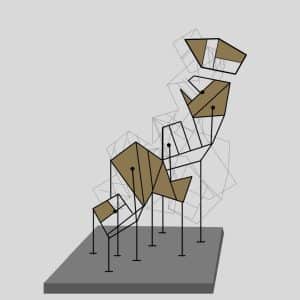
Carving Shapes from Imagination
“The playground, instead of telling the child what to do (swing here, climb there), becomes a place for endless exploration, of endless opportunity for changing play. And it is a thing of beauty as the modern artist has found beauty…
Read More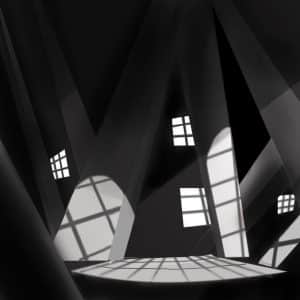
Thoughts on Louis Kahn and Coleridge
“Structure is the giver of light. When I choose an order of structure that calls for column alongside column, it presents a rhythm of no light, light, no light, light, no light, light. A vault, a dome, is also a…
Read More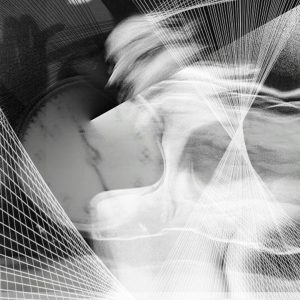
Some Thoughts on Gyorgy Kepes
Hungarian artist Gyorgy Kepes dedicated his life to integrating art and science. He became a member of the M.I.T. faculty in 1946. In 1967, he established the Center for Advanced Visual Studies within the School of Architecture to facilitate the…
Read More
Embodied Cognition at Cambridge Creation Lab
Embodiment refers to the physical form or manifestation of cognition. It enables intelligent beings—whether artificial or organic—to perceive and alter their environment. It is an active participant that both influences and is influenced by its intellect. Intelligence is the capacity…
Read More
Linkages-Transdisciplinary Perspectives
Linkages are mechanical systems that transform one form of input motion into a different form of output motion. This is accomplished by linking stiff bodies in a manner that retains at least one (and usually precisely one) degree of freedom.A…
Read More
How Can We Weave a Language?
The “language” of knitting patterns and architecture is characterized by their sharing of structure, design, and repetitive features. To generate sophisticated, practical, and appealing solutions, both sectors employ fundamental criteria. These criteria often include attention to detail, functionality, and aesthetic…
Read More
Impossible Objects
New studies in vision science indicate that visual art frequently deviates from the fundamental principles of physics and is only comprehensible within the context of human consciousness. An example is the Impossible Object, which is also known as an impossible…
Read More
Transformative Geometric Forms
Geometric abstract art integrates mathematical forms—such as circles, squares, triangles, and lines—to create structured and aesthetically pleasing compositions. Precision, symmetry, and the interplay between shapes and spaces provide a harmonious equilibrium that captivates observers. Cubism was another influential movement that…
Read More
Reconceptualize Joycean Literature
An analysis of James Joyce’s linguistic play and conceptual engagement with innovative geometric constructions in Ulysses and Finnegans Wake reveals how his topographical depiction of place reflects a shared dilemma between geometric and linguistic modalities of representation. Joyce’s intricate interplay…
Read More
Finding Our Visual Language
Shape grammars offer a robust formal framework for the generative characterization of designs. Compared to other generative systems, their distinctive characteristic is that they do visual calculations instead of symbolic computations. Such an approach allows a more intuitive exploration of…
Read More
Lived Body Designs
In several sections of his Phenomenology of Perception, Merleau-Ponty, a French phenomenological philosopher, considers habit a significant topic within his philosophical and phenomenological framework. His analysis clarifies the pre-reflexive essence of our initial engagement with the environment and the nature…
Read More
Lexical Competency in Young Children
Studies demonstrate that lexical competency substantially influences reading skills and spelling accuracy in elementary school students. This association highlights the need to cultivate vocabulary and linguistic proficiency throughout early childhood. By augmenting lexical competence, educators may enhance early learners’ understanding…
Read More
Reflections on Synergetics
Synergetics is the foundational discipline underpinning Richard Buckminster Fuller’s concepts of a sustainable future for humanity. Fuller believes in the creativity of human thinking and claims that using the rules of nature in design science can provide enough support for…
Read More
Making Thinking Visible- a Habit
An artificial intelligence system that is capable of generating new material, such as pictures, texts, or sounds, generates new content by taking in suggestions in various formats, most often genuine human language. The statistical patterns discovered in massive datasets are…
Read More
Sounding Space
Integrating space and sound to create an engaging multidimensional environment is crucial in the creation of a workstation. By combining acoustic design with spatial considerations, workspaces can transcend traditional layouts, inspiring creativity and collaboration. Sound, an imperceptible sensation that traverses…
Read More